When the chains go marching in

A guest article from Julie Holck

In order to understand cities properly, we have to look at them through retail. Retail and urban life have always been two sides of the same coin and although shops alone cannot create a city, retail is a crucial part of urban life. Thousands of cities have been founded on market places and retail has been one of the most powerful drivers in the development of civilisation.

Shops attract people and thereby life – without customers they wouldn’t exist – but they do it in different ways. According to their size, location, structure, values and aesthetics, stores create different kinds of life and different kinds of cities. Shops are ‘mini worlds’, potentially framing experiences, enchantment, surprises and dialogue. Everyday conversations between retailers and customers can create confidence between people and establish a kind of local pride as well as a sense of place.

But shops can also do the opposite, providing homogeneity, boredom and unattractiveness. They can destroy the inner urban structures and suck the life out of the city streets.

Being aware of the consequences of shops is essential when dealing with urban planning on any scale. If we want not only liveable but also lovable cities we need a life generating retail structure and a counter strategy to today’s challenges – which involve the closure of more and more individual stores, the increasing number of chain stores and the growth in store scale.

The concrete situation is that we see more and more towns with very few or no shops at all. When the last grocery shop closes down, so does the town.

Every year 2000 individual food stores go out of business in the UK and the same goes for a number of other Western countries. When that happens, the city loses a little bit of its character. And every time a shop closes we lose a destination in the city. Eventually we lose reasons to go out and thereby we lose people and life in the streets.

While the individual shops go out of business, the chain stores continue to go in. Chain stores look the same everywhere (that’s kind of the point!), but it’s not necessarily a pretty sight – at least it’s not a very interesting sight, as you’ve probably seen it all before. The result, in the end, is that we can hardly distinguish one high street from the other. When the chain stores go marching in, those qualities of chance, the unpredictable and the unusual, which has always given cities their renewable, variable, cosmopolitan, living character, is lost.

Parallel to this we can observe how shopping centers still attract loads of customers. Shopping centres are comfortable and predictable and protect us from bad weather and other inconveniences of the real world (such as beggars, activists, litter and traffic). But although they do attract a lot of customers, who might also sneak out to do some shopping in the streets, aesthetically their contribution to the living city is rather small. Turning their back to the city, they only show the passer-by their huge, enclosed facades. Looked upon as identity makers and street life generators, shopping centres (and chain stores) don’t score very highly. No matter how spectacular the design, they just don’t provide a feeling of place.

Cities (especially in Northern Europe) have been craving for identity for decades. Every city wants to be unique and those who can afford it build beautiful museums and expensive apartments. And that’s fine, but it’s not enough. It’s not the museums that create the everyday buzz of the city; shops do that.

Shops provide an important social and sensuous space and in order to create a living city, it’s crucial to nurse and encourage a unique retail environment with a certain amount of smaller, individual stores. The right shops in the right location function as strong place makers for cities that are or want to be: ALIVE.

Case studies: Jaegersborggade and Vaernedamsvej, Copenhagen
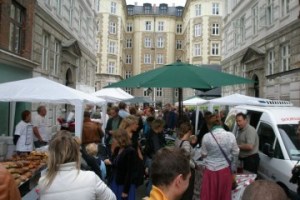
Jaegersborggade Farmers Market from oproerframaven.dk

In Copenhagen a street called Jaegersborggade has changed dramatically within the last 10 years, thanks to the residents’ retail initiatives. From being a gloomy and unattractive place, the home of a motorcycle gang, the street is now a hip and rather unique shopping and leisure destination with small designer shops, famous chefs’ restaurants and a weekly organic market. The residents decided to rent out – to a low rent – all the ground floor/basement spaces to unique shops and eateries and the result is clear today. Jaegersborggade has become a very attractive street and lively, especially on Saturdays. The board of the housing cooperatives is in charge of the renting procedures and decides who to host.
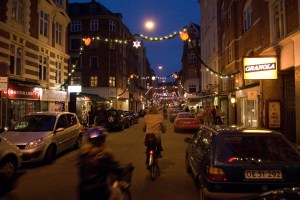
Vaernedamsvej by Normann-Foto.com

In another street, Vaernedamsvej (200 m.), known as Copenhagen’s “little Paris” (very little!) we find 46 different shops/eateries and only 6 of them are part of a chain. There is a special relation between the owners here, and the street makes up a small local community in the middle of the big city. The long history of the street as a shopping street but also the small spaces may be part of the answer to why this is so. There is no formal programme for the street but it has, somehow, found an order of its own, thanks to the social relations and the agreed upon aim of creating/maintaining a special atmosphere with unique shops, focusing on food and fashion.

Low rents, small spaces (rooms), some kind of substance/image consensus and a certain degree of self-determination seem to be constructive in the creation of lively and attractive (shopping) streets.

Julie Holck is a retail consultant for Gehl Architects and has recently completed a PhD on the relationship between cities and retail. Her dissertation, ‘The Shops and the Living Cities’ focuses on how shops contribute to living cities, including reflections on the definition of ‘a living city’, why they are important to us – both socially, culturally and economically – and how we can create alternative and sustainable urban shopping environments.

December’s Street Talk

The word from the street – we want to hear from you

7pm on Tuesday 6th December at Look Mum No Hands, 49 Old Street, EC1V 9HX

For December’s Street Talk we want to hear from you. What are your hopes, fears and ideas for a more liveable London?

If you were mayor what would you do to solve London’s transport challenges? How can London become a great city for walking and cycling? Where should London look for inspiration? What public spaces would you like to see improved, and how? How would you convince politicians that they need to take these issues seriously? What’s your commute like, what would you change and what would you keep?

We’d like to hear your thoughts on how and why London could be made a more liveable city. What you talk about and whether you use slides is up to you. You can be as light hearted or as serious as you like. Passion is more important than experience and the only rule is that you will have exactly 7½ minutes to present.

We still have a couple of speaking slots available, if you’d like to speak please send us a 150 word summary.

What to do about cycling in outer London

A guest article from David Arditti

We know there is a particular problem with cycling in outer London. We know this from the figures. While the cycling modal share (proportion of all trips) in Hackney, the highest-cycling  London borough, is 6%, for Bromley it is only 0.5%, and for 18 of the other outer London boroughs it is below 2%. This is not to say that cycling is absolutely high in inner London. Dutch cities have cycling modal shares between 20% and 60% – so even Hackney has nothing particularly to boast of on the European scale. But it has been the case that, while cycling has undergone a significant revival in inner London in the last four decades, it has stagnated or declined in outer London; the “Cycling Revolution” proclaimed by Boris Johnson (which was in fact occurring in inner London long before his mayoralty) has not touched the suburbs.

The borough of Brent is a particularly interesting case, running from within easy cycling distance of central London, in the dense suburbs of Queens Park and Kilburn, to the very different environment of semi-detached, big-garden, rail-commuting “Metroland” in places like Wembley and Kingsbury. Figures for the proportion of people cycling to work for the different wards of Brent show a huge variation, from 4.2% in Queens Park to 0.5% in Kenton. In such places as Kenton, cycling may be said to have fallen to a level of mere “noise” in the transport background: no longer a significant element of transport at all, the 0.5% probably represents an irreducible minimum level of people temporarily trying cycling for a while, before giving it up again owing the hostility of the environment.

While people who live in outer London and work in central London might not be expected to commute to work by bike in significant numbers, given the efficiency of rail services, it should also be borne in mind that most workers in the outer boroughs do not now commute to the centre. Outer London has developed strong local economies and associated travel patterns between residential areas and local town centres, and many of the resulting commutes could be easily cycled, but are not, because cycling is not felt to be an attractive option. In addition, there are a great many other short journeys that outer Londoners make, for shopping, leisure, and particularly school trips, and other journeys that children may make, that could easily be cycled, if conditions were right. But for the whole of Brent, shockingly, cycling only accounts for 0.3% of journeys to school.

To make cycling a viable option for the very high number of short trips that outer Londoners make, we need to look hard at what has been shown to work to increase cycling in urban environments of similar density in other countries, in particular, the high-cycling countries of Europe: the Netherlands, Belgium, Denmark, Sweden, Germany, Finland, Switzerland and Austria, which give the closest parallels to our culture and human, physical and economic geography. In so doing, we need to be evidence-driven, and to throw out the “witchcraft” approach to promoting cycling which has for so long dominated thinking on the subject in the UK. By “witchcraft”, I mean all those traditional ideas about training people to cycle in a vehicular manner to fit in with a motor-dominated environment (known as Cyclecraft or Bikeability), the emphasis on propaganda through “encouragement” and “awareness-raising” that forms such a large part of local authorities’ cycling strategies, and the emphasis on protection and visibility for cyclists (helmets and dayglow) and on telling cyclists to stay out of the way of lorries. Forty years of promoting such ideas have resulted in the virtual death of cycling in the suburbs.

Continue reading

November’s Street Talk

Richard Hebditch and Richard Bourn, Campaign for Better Transport: Sustaining suburbia – transport solutions for outer London

London is often held up as a good example of reducing car traffic and encouraging more sustainable forms of transport, but this masks a big difference between inner London (where car ownership is lower and public transport, walking and cycling are much higher) and outer London where travel patterns are much closer to those of other UK cities.

Next year’s mayoral elections will see Ken Livingstone looking to win back votes in outer London, Boris Johnson looking to present himself as not just a zone 1 mayor and Brian Paddick and Jenny Jones needing to find ways to mark themselves out from the two main challengers.

At November’s Street Talk Richard Bourn and Richard Hebditch from Campaign for Better Transport will look at why outer London is different, what can be done to change travel patterns and whether Mayoral candidates will be able to set out a convincing vision for sustainable travel in suburban London.

Upstairs at The Yorkshire Grey, 2 Theobalds Road, WC1X 8PN at 7pm (bar open 6pm) on 1st November 2011.

Richard Bourn worked for Campaign for Better Transport in the 1990’s as a volunteer, contributing to publications on rail privatisation and other issues. After working for other NGOs he returned in 2001 as London Campaigner and concentrated on supporting the introduction of the congestion charge. His work now focuses on traffic reduction, but also includes transport and social exclusion, and promoting the integration of transport and land-use planning to shorten journeys and allow more walking and cycling.

Richard Hebditch leads Campaign for Better Transport’s work on local transport and promotes links with parliamentarians and political parties while leading the campaign team. Previously he worked for Living Streets, which campaigns on behalf of pedestrians, where he was head of policy and communications. Richard has also served as senior policy adviser in the Cabinet Office’s Office of the Third Sector, where he worked on the Compact agreement to improve relations between local and national government and the voluntary sector.

For nearly 40 years Campaign for Better Transport has fought for better public transport, walking and cycling, for the sake of communities and the environment. An independent charity, they work by providing well-researched, practical solutions to transport problems, pressuring national and local government to adopt them, and empowering ordinary people up and down the country.

October’s Street Talk

Oliver Schulze, Director, Gehl Architects: People first – putting the public back into the public realm.

The public realm is the social heart of any city, but social activities of all kinds continue to be squeezed out by efforts to accommodate rather than reduce traffic growth. When cities put cars before people the social and economic life the city suffers and no one has the option to opt out of the environmental impacts.

Join us and Oliver Schulze from Gehl Architects at October’s Street Talk for a journey from Copenhagen to the bike lanes of LA – via taco trucks, snowball fights in Times Square, surface parking lots, Starbucks and Disneyland – as we consider how to put the public back into the public realm. What needs to be done to ensure walking down the street or pausing to chat in a local square is a pleasure rather than a chore? What lessons can London learn from recent efforts to prioritise pedestrians in cities across the world, including New York and even car centric Los Angeles?

Upstairs at The Yorkshire Grey, 2 Theobalds Road, WC1X 8PN at 7pm (bar open from 6pm) on 4th October.

Oliver Schulze is director of Gehl Architect’s design studio. He has worked on a diverse portfolio of international public realm design projects ranging from strategic urban planning initiatives at the scale of cities and regions, to the delivery of award-winning public spaces.

Gehl Architects – Urban Quality Consultants is a consulting firm offering expertise in the fields of urban design, city planning and architecture. They consider the lively and widely used public realm to be one of the most important keys to experiencing quality in cities. Their work is based on prioritising the human dimension in planning as well as the built environment’s effect on social interaction between people.

Monitoring Air Quality on London Greenways

A guest article from Eleanor Besley, Policy Advisor, Sustrans

Here at Sustrans we’re cooking up some exciting plans which will help us to show how our work, which aims to get more people out and about on foot and by bike, can help London to achieve the wide range of complex objectives it faces. Over the next few months, one of our key focuses will be on air quality.

We’re kindly being supported by the Campaign for Clean Air in London, AEA and Mapping for Change and working in association with the Chartered Institute of Environmental Health, Environmental Protection UK and the Healthy Air Campaign on an initiative which seeks to monitor the levels of Nitrogen Dioxide (NO2) on London Greenways and compare them to alternative and comparable routes on busy and main roads. We will tie-in the beginning of the process (the placing of NO2 monitoring ‘boxes’) with the World Environmental Health Day, being developed by the Chartered Institute of Environmental Health, taking place on 26th September 2011 and have invited London politicians, stakeholders, volunteers, supporters and others to come along to a short information session on the day.

Of all emissions and pollutants, NO2 is the cheapest and easiest to measure at a local level with volunteers and other non-specialists helping us. NO2 is also a good marker for other pollutants in the air – where there are high concentrations of NO2 we often find high concentrations of other air pollutants such as PM10. We’re working on a project which we hope will show just how important it is for London to continue to develop its growing network of greenways in order to offer people a cleaner and healthier alternative to walking and cycling on very busy routes.

Greenways are safe, quiet routes through parks, green spaces and lightly trafficked streets. They are designed to connect people on foot or bike, whatever their ability or purpose, to facilities, parks and open spaces. Our monitoring has shown that greenways often help underrepresented groups overcome the barriers to active travel. Across all of London for example, Two thirds of frequent cyclists (those who cycle once a week or more often) and more than half of infrequent cyclists are men whilst on the Ravensbourne Park greenway, women made up over 52% of users.

As part of our quality of life manifesto for transport in the capital, Sustrans want to achieve a ‘greater’ Greater London. As London expands, it is essential that policy reacts to meet increasingly complex demands and growing inequality, alongside a focus on tackling congestion, air quality and childhood obesity. In our manifesto for London we have called for increased funding for the development of London Greenways which enable new, nervous and inexperienced groups to get out on foot and by bike.

Air quality seems to improve in London as one’s distance increases from the centre of the city and from main roads. Thus, even a small separation from cars has been found to be of benefit, especially when created by physical barriers. The preliminary results of ongoing research suggest that bike lanes are best when built at least one block from a major traffic artery. The chances are extremely high that air quality on Greenways will be better than on main roads. We want to know how much better the Greenways are for people and hope that the work we’re about to start will further encourage new and inexperienced groups to start walking and cycling whilst also helping the mayor to achieve his objectives as outlined in the  Air Quality Strategy.

If you’d like to know more about the work we’re doing on air quality or about our policy work here in London more generally then please get in touch.

September’s Street Talk

London is the most polluted city in the UK and one of the most polluted in Europe. Exposure to dangerous airborne particles is estimated to have caused 4,300 premature deaths in 2008 alone. Air pollution in London averages well over twice World Health Organisation (WHO) maximum recommended levels near many of the capitals busiest roads.

Living near roads travelled by 10,000 or more vehicles per day could be responsible for some 15-30 per cent of all new cases of asthma in children; and of COPD (chronic obstructive pulmonary disease) and coronary heart disease in adults 65 years of age and older. 1,148 schools in London are within 150 metres of roads carrying 10,000 or more vehicles per day and a total of 2,270 schools within 400 metres of such roads.

Join us and Simon Birkett, Founder and Director of Clean Air in London at September’s Street Talk as we expose one of the biggest public health failings or cover-ups by a Government in modern history. Why is London’s air so polluted and what steps need to be taken to radically improve air quality? Will drastic measures need to be taken to ensure athletes can breathe easily at the 2012 Olympics? Why have our political leaders failed to act, leaving us liable to pay unlimited EU fines for failing to comply with laws that have been in legislation since 1999?

Simon Birkett, Founder and Director of Clean Air in London: A breath of fresh air – exposing one of the biggest public health failings or cover-ups by a Government in modern history.

Upstairs at The Yorkshire Grey, 2 Theobalds Road, WC1X 8PN at 7pm (bar open 6pm) on 6th September 2011.

Simon Birkett founded Clean Air in London in 2006 and since then has campaigned tirelessly for an urgent and sustainable reduction in pollution to at least WHO recommended standards of air quality throughout London and elsewhere. Last year The Guardian’s John Vidal praised Simon for “almost single-handedly [bringing] the UK government to its knees, begging for more time from Europe to lower pollution levels in London and forcing mayor Boris Johnson to act.”

Clean Air in London won the City of London Corporation’s Sustainable City Award presented for Outstanding Contributions to Enhancing Air Quality 2010/11. Simon Birkett is a Science and Policy Advisor to ClientEarth since and has been a member of Environmental Protection UK’s Air Quality Committee since 2009. He was profiled by the Guardian on 22 February 2011: Former banker’s pollution fight a breath of fresh air.

July’s Street Talk

Road death is the leading cause of death for those aged between 5 and 40. You are four times more likely to be killed in a crash than from murder/manslaughter. The domination of our public spaces by motorised vehicles means that every time you step out, especially on foot or on a bike, you take a risk like no other – this is the price we pay for an over-motorised and car dependent society.

And yet the police allocate only a fraction of resources to enforcement, compared to that invested in preventing other crimes. Those injured by dangerous, speeding or drink drivers are not even included in counts of victims of crime statistics. Speeding vehicles was the most common type of anti-social behaviour reported in the British Crime Survey—until it was dropped from the survey.

Join us and Amy Aeron-Thomas, Executive Director of RoadPeace, the national charity for road crash victims and those concerned about road danger at July’s Street Talk to discuss the work RoadPeace is doing to challenge the justice sector’s tolerance of road danger, including the need for greater transparency and accountability, and highlight how this plays a key role in creating a safer and fairer city.

Amy Aeron-Thomas, Executive Director, RoadPeace: Towards a safer and fairer city – traffic justice in London. Upstairs at The Yorkshire Grey, 2 Theobalds Road, WC1X 8PN at 7pm (bar open 6pm) on 5th July 2011.

Amy first became involved with RoadPeace in 2000 whilst working for TRL on a DFID funded scoping study in community participation and traffic safety. With graduate degrees in Public Administration, Transportation Engineering and Planning, she has worked in over 14 countries in Africa, Asia, and Central Europe.

Her career began in the US where she worked as a transport planner, including promoting car ride sharing (in 1986). Her brother was one of the over 50,000 Americans killed on the roads in 1965. She is keen to promote evidence-based policy and links between researchers and campaigners.

RoadPeace is an independent national charity, providing practical and emotional support, and advocacy to those affected by road crashes; as well as campaigning for justice for road crash victims and for road danger reduction, with a focus on reducing the volume, speed and dominance of motorised traffic and promoting cycling and walking. RoadPeace was a winner of the Guardian Charity Award in 2008.

RoadPeace was founded in 1992 on the principle of road danger reduction (RDR). RDR focuses on making the road environment less dangerous by tackling danger at source through reducing the speed, volume and dominance of motorised traffic. It also takes into account the other negative consequences of inappropriate and excessive motor vehicle use such as fear and intimidation, environmental impact and public health issues. RDR differs from traditional road safety in that it adopts a wider approach that considers not only the quantity of death and injury by crashes, but also the effects of excessive and inappropriate motor vehicle use on the quality of life and the environment. It places a greater duty of care on those that pose the greater threat and argues for danger to be controlled at source.

June’s Street Talk

Streets make up the majority of London’s public realm; as such they should be places where human movement, interaction and exchange take precedence over the need to keep traffic flowing.

Join us and Andrew Cameron, Director of Urban Design at WSP Group for June’s Street Talk to discuss how London’s streets can be redesigned to reduce the dominance of the car, give priority to people and encourage walking and cycling. What are the key ingredients of a great street? How do we reclaim our streets as social spaces – places for loitering, strolling, sitting and gossiping?

Andrew Cameron, Director of Urban Design, WSP Group: How to make great streets. Upstairs at The Yorkshire Grey, 2 Theobalds Road, WC1X 8PN at 7pm (bar open 6pm) on 14th June 2011.

An engineer with a background in transportation, architectural engineering and urban design, Andrew is one of the country’s leading experts on planning for movement whilst at the same time creating great streets and enjoyable places. He has been involved in many regeneration and masterplanning projects for villages, towns and cities in the UK and overseas.

He has acted as an advisor to Government with The Urban Task Force and for The House of Commons Select Committees on Housing and Sustainable Communities. He is co-author of national and local design guidance, including Places, Streets and Movement, The Urban Design Compendium, Designing Streets and Manual for Streets 1 and 2.

May’s Street Talk

As a nation we’re getting fatter – the prevalence of obesity in England has more than doubled in the last 25 years, and research by the Government’s Foresight unit predicts that by 2050 over 50% of adults and 25% of children could be obese.

Increasingly sedentary lives mean people burn fewer calories as part of their daily routines, including walking and cycling less. In London cars are used for 30% of 0.5km – 1km trips (a 5 – 15 minute walk), 50% of 1km – 2km trips (a 5 – 10 minute bike ride) and 60% of 2km – 5km trips (a 10 – 20 minute bike ride). 69% of adults and 35% of children do not reach the recommended levels of physical activity (at least 30 minutes a day five or more days a week for adults and at least 60 minutes every day for children).

Join us and Dr Harry Rutter, Director of the National Obesity Observatory at May’s Street Talk to explore the impact of these trends, consider how the built environment influences health and discuss what can be done to encourage more Londoners to travel actively.

Dr Harry Rutter, Director of the National Obesity Observatory: Moving towards a healthier city – active travel and health. Upstairs at The Yorkshire Grey, 2 Theobalds Road, WC1X 8PN at 7pm (bar open 6pm) on 4th May 2011.

Harry Rutter is a public health physician based in Oxford, England. He is the founder director of the National Obesity Observatory for England, and an honorary senior clinical lecturer at the University of Oxford where he teaches on both climate change and childhood obesity. He led the development of the National Child Measurement Programme childhood obesity surveillance system, is a member of the Department of Health Expert Group on obesity and of the current NICE review group on preventing obesity; he also sat on the management group of the Foresight Obesities project.

Harry is a founder member of the steering committee of the European Health Enhancing Physical Activity network; sits on the WHO Cycling and Walking Health Economic Appraisal Toolkit steering group; and jointly led work packages on two recent EU-funded projects on obesity, physical activity, and the built environment. He has a broad interest in the relationships between all aspects of transport, sustainability, built environment and health, in particular the health impacts of walking and cycling. He is also increasingly interested in the evaluation of public health outcomes within complex systems, and the development of tools to support evidence-based public health policy.

His personal website is at www.modalshift.org and he can be found on Twitter @harryrutter.